Wellington: 
(04) 801 6228
Lower Hutt:
(04) 570 0520
Supreme-Dental-Concepts-Web-100h
CALL / BOOK NOW

Emergency Dentistry

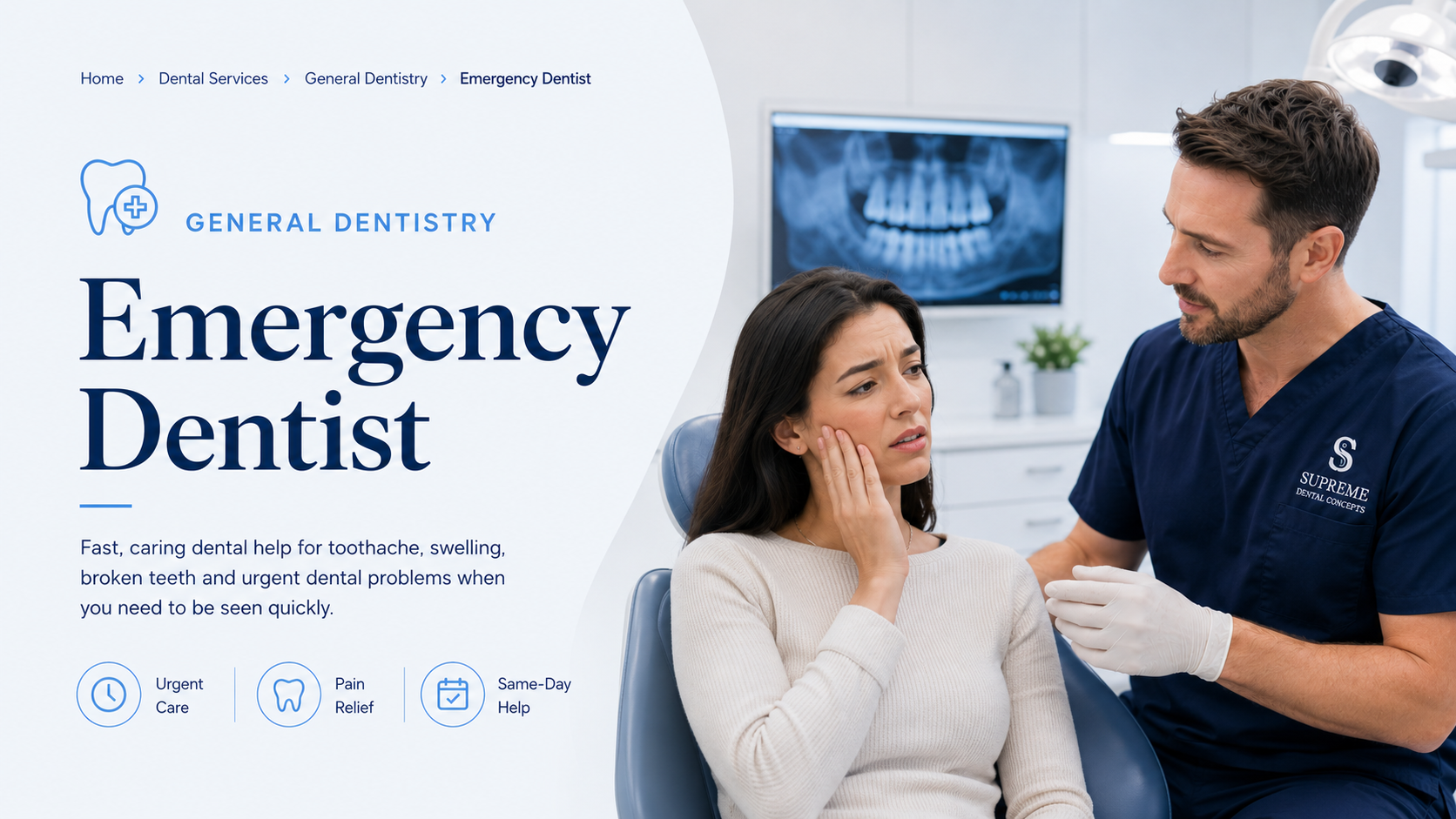
We recognise that dental emergency situations do arise, & at our practice, we will do our best to respond to your problem promptly. 
Emergency Dentist Wellington
When you need urgent dental care, getting the right help quickly matters. At Supreme Dental Concepts, we provide emergency dental care in Wellington for patients dealing with tooth pain, swelling, dental trauma, broken teeth, lost fillings, and other urgent problems. If you need an emergency dentist in Wellington, our team will do our best to see you as soon as possible and help relieve pain, stabilise the problem, and guide you on the next steps. This aligns with the audit’s highest-priority opportunity for your site.
Blog Emergency Dentistry
The most common reasons our patients need emergency dentistry are accidents or toothaches. Toothaches can be caused by infection or by injuries. If you are suffering from a toothache, don’t hesitate to call us immediately. We will get you in as soon as possible & figure out what is going on so we can relieve your pain.

A tooth that has been knocked out or cracked is perhaps the most critical dental emergency. If your tooth has been knocked out in an accident, seeing a dentist as soon as possible is vital to saving your tooth. In the meantime before you get to the dentist, you can take steps to keep your tooth alive, including gently trying to place the tooth back in its socket (without touching the root), keeping the tooth between your gums & lip, or placing it in a glass of milk. If your dental emergency is potentially life threatening, you should go to the A&E department.

Same-Day Emergency Dental Care in Wellington

Dental emergencies are often painful, stressful, and disruptive. In many cases, early treatment can reduce pain, prevent the problem from worsening, and improve the chances of saving a tooth.
We aim to help patients with urgent dental concerns, such as:
• severe toothache
• facial swelling
• infection
• broken, cracked, or chipped teeth
• knocked-out teeth
• lost crowns or fillings
• bleeding or trauma involving the teeth or gums
If you are in pain and unsure whether your issue is urgent, contact our Wellington clinic, and we can advise you on the next step.


What Counts as a Dental Emergency?

A dental emergency is any problem involving significant pain, swelling, infection, trauma, or damage that should not be left to wait.
Common dental emergencies include:
Severe Toothache
A strong or persistent toothache can be a sign of deep decay, infection, nerve irritation, or a crack in the tooth. If the pain is keeping you awake, worsening, or associated with swelling, it should be assessed promptly.
Swelling or Dental Infection
Swelling in the gums, face, or jaw may indicate infection. Dental infections can worsen quickly and should not be ignored. If you have swelling, pain on biting, or a bad taste in the mouth, urgent assessment is important.
Broken, Chipped, or Cracked Tooth
A broken tooth may be painful, sharp, or at risk of further damage. Even if pain is mild, treatment may still be needed to protect the tooth and restore function.
Knocked-Out Tooth
A knocked-out adult tooth is a true dental emergency. Fast action gives the best chance of saving the tooth.
Lost Filling, Crown, or Bridge
A lost restoration may expose sensitive tooth structure, cause pain, or leave the tooth vulnerable to fracture.
Dental Trauma
Injuries from falls, accidents, or sport can affect the teeth, roots, gums, and surrounding bone. Even if damage is not obvious at first, it is worth getting checked.


FAQ
Dental emergencies can vary widely but generally include severe pain, bleeding, infections, and accidents affecting the teeth and gums. If you're experiencing intense pain, have suffered a dental injury, or notice signs of infection like swelling or a pus-filled abscess, it's crucial to seek immediate dental car
For toothaches, recommended at-home care includes using over-the-counter pain relievers, applying clove oil to the affected area, and rinsing with salt water to alleviate discomfort and disinfect the mouth. However, these measures are temporary, and it's important to see a dentist promptly for a thorough evaluation and treatment
While some immediate care measures can be taken at home, such as cleaning the area or using cold compresses for swelling, dental emergencies require professional evaluation and treatment to properly address the underlying cause and prevent further complications. DIY treatments, especially for conditions like abscesses or severe tooth damage, can lead to more serious health risks and should be avoided
Treatment varies based on the emergency but may include root canal therapy for infections, dental fillings or crowns for cavities and minor damages, extractions for severely damaged or infected teeth, and reattachment procedures for knocked-out teeth. The specific treatment approach will depend on the emergency's nature and severity, as assessed by a dental professiona

1. Pick Up the Tooth by the Crown (Top): Avoid touching the root of the tooth. The root contains important cells necessary for reattachment to the bone.

2. Clean the Tooth if Dirty: Gently rinse the tooth with water if it's dirty. Do not use soap or chemicals, don't scrub the tooth, and don't wrap the tooth in a tissue or cloth.

3. Reinsert the Tooth in the Socket: If possible, try to put the tooth back into its socket right away. Make sure it's facing the right way, but don't force it into the socket.

4.Keep the Tooth Moist: If you can't reinsert the tooth, keep it moist to prevent it from drying out. Place it in milk, or use an emergency tooth preservation kit if available. Avoid storing the tooth in water, as this can damage the root cells.

5. See a Dentist Immediately: Time is critical in saving a knocked-out tooth. See a dentist as soon as possible, ideally within 30 minutes to an hour of the accident. The sooner the tooth is re-implanted, the better the chance it will survive.

6. Take Over-the-Counter Pain Relief if Necessary: If you're in pain, over-the-counter pain relievers can help. Applying a cold pack to the cheek or lips over the area can also reduce swelling and relieve discomfort.

Today ( Day of your surgery or extraction)
No physical activity, running, lifting, etc.

1 Rinsing the mouth should be avoided for the remainder of the day. Normal cold drinks and food can be consumed, however alcohol should be avoided.

2 Avoid sucking at or interfering with the wound. This will dislodge a blood clot that is trying to form.

3 Panadol, Paracetamol, Nurofen, or a similar preparation may be used to relieve pain. Start taking pain relief before the anesthetic wears off.

4 If bleeding occurs, place a small thick pad of gauze or clean cotton roll (or linen) directly on the wound and hold it firmly between the jaws for 15 - 30 minutes.

5 If there is any undue pain, excessive bleeding, or other symptoms, please report this to your dentist immediately.

6 If you smoke, no smoking today. A dry socket (infection) could result
.
7 If any problems arise that you are unsure of, a dentist can be contacted at Supreme Dental Concepts during normal working hours or by leaving a message on  8016228 or 5700520

Tomorrow
Begin mouth baths the following morning. Use half a teaspoon of salt in a glass of very warm water. It is the heat that you benefit from when doing this. Repeat this for 5-7 days, 3 or 4 times daily.

After you have an extraction occasionally the blood supply to the surrounding bone area is compromised resulting in inflammation and pain. This can occur immediately after a few hours of the extraction but normall it occurs 2-3 days after. If you do nothing it will normally last up to 10 days but you are better to see your dentist to get a dressing to relieve you of pain and reduce the inflammation

 
Blow to the face ( soft tissue trauma)
 
This injury can look a lot more serious
than it is in some cases. Often, soft tissue trauma involves a lot of blood. To stem the flow of blood it is important to apply soft firm pressure to the area for 3-5 minutes to allow the blood to start to clot and stem the blood flow. If a wet cloth is available, then just quickly clean the area before you apply pressure. A thorough dental examination is required as you can easily fracture bones, etc, associated with the area.
Apply also a cold compress to the area to reduce swelling that may result

Call us today with any questions or to book your appointment!

Wellington:
or
Lower Hutt:
Book Online Now

Facial Aesthetics

At Supreme Dental Concepts, we provide a comprehensive selection of cosmetic dentistry services designed to give you the confident smile you desire.

Our commitment extends to ensuring you look your absolute best.

As dentists, our training in injection techniques and facial anatomy during dental school equips us to preserve your youthful appearance, complementing your beautiful teeth.


More About Facial Esthetics
Supreme-Dental-Logo-Colour
crossmenu

Book Online Now

Wellington Lower Hutt