Wellington:
(04) 801 6228
Lower Hutt:
(04) 570 0520
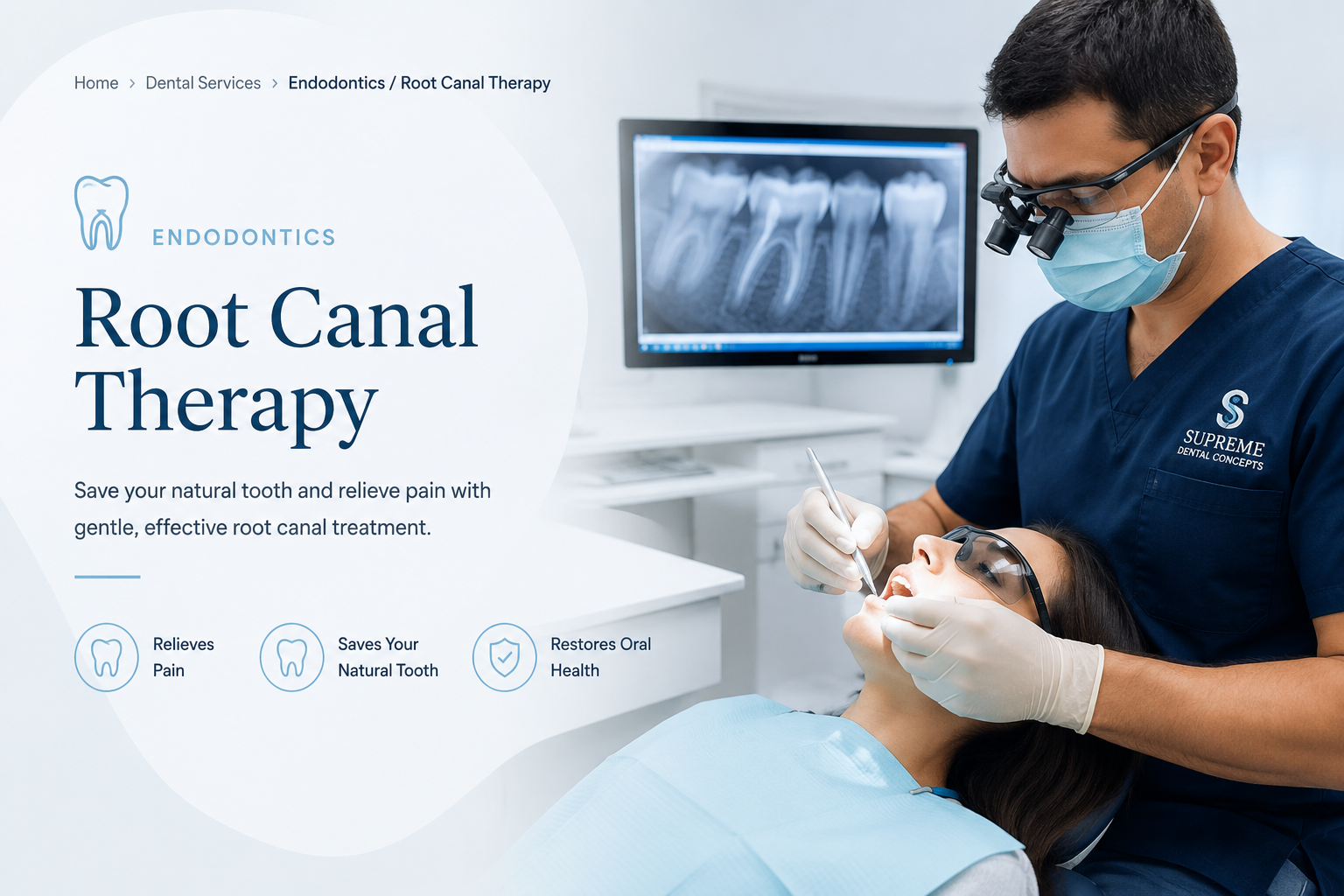
Of all the treatments we do, the root canal has the worst reputation, and the most undeserved one. If the words alone make you tense up, you're in good company. Most people arrive expecting the worst. Here's the part that surprises them: a root canal is the treatment that takes pain away, not one that causes it. The bad reputation belongs to the toothache that sends you in, not to the procedure that fixes it.
We've been doing this a long time, and we treat a lot of nervous patients. So this page does two things. It explains what a root canal actually is, in plain terms, and it's honest about what it costs, including the part most websites leave out. Have a read at your own pace, and if anything doesn't make sense, ask.
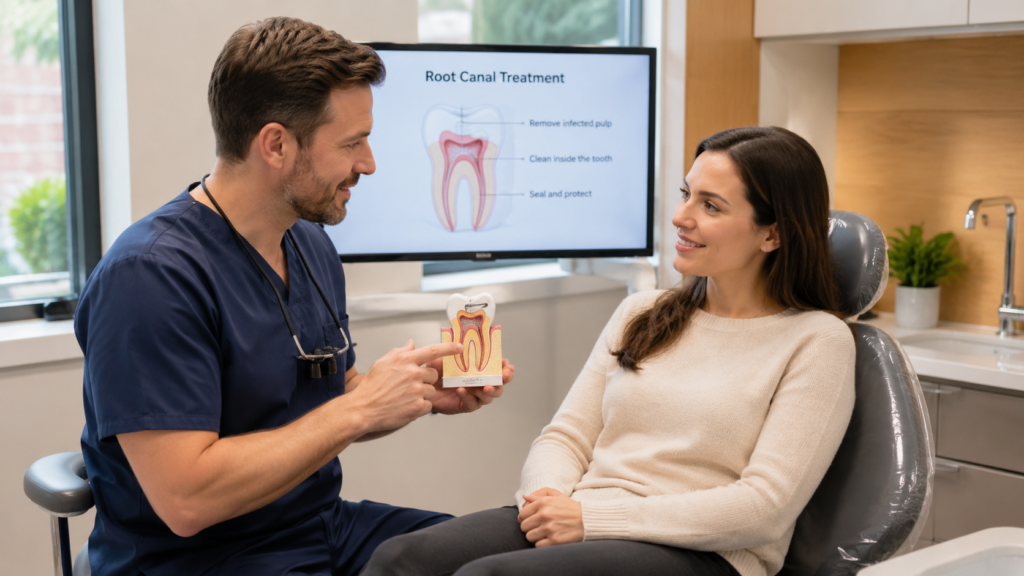
Inside every tooth there's a hollow space, and inside that space is the soft tissue that keeps the tooth alive, what we call the pulp. It's what lets your tooth sense hot and cold. When decay gets deep enough to reach that inner tissue, or the tooth is cracked or knocked, the pulp can become infected and start to die. That's where the pain comes from.
A root canal clears out that infected tissue from inside the tooth, cleans the space, and seals it up. The infection has nowhere left to live, the pain settles, and you keep your own tooth instead of losing it. That last part matters more than people realise: nothing works quite as well as the tooth you were born with, so saving it is almost always worth it.
Sometimes there's no pain at all, just a shadow we spot on an X-ray or a tooth that's quietly changed. That's one of the reasons regular check-ups earn their keep. We can often catch this before it ever becomes a problem you feel.
This is the question underneath all the others, so we'll answer it straight. The tooth is fully numbed before we start, so during the appointment you shouldn't feel pain, just the awareness that we're working. For most people, the discomfort they walked in with eases once the infected tissue is gone. Afterwards the tooth can feel tender for a few days as things settle, the same as any healing, and ordinary pain relief handles it.
If you're someone who dreads dental work, tell us. We mean that. We'd far rather know, so we can take it at your pace, talk you through each step before it happens, and stop whenever you need to. You stay in control the whole way through. Plenty of people who arrive bracing for the worst leave saying it was nothing like what they'd built up in their head
A root canal usually takes one or two appointments, depending on the tooth. The steps are straightforward:
Numbing the tooth. We make sure the whole area is properly numb before anything starts, and we check with you that it is.
Clearing the inside. We make a small opening in the top of the tooth, remove the infected tissue, and gently clean out the space inside. This is the part that takes the pressure and pain away.
Sealing it. Once the inside is clean, we fill the space with a sealing material so nothing can get back in. You may get a temporary cover while things settle before the final step.
Protecting the tooth. A tooth that's had a root canal becomes more brittle over time, so it usually needs a crown to protect it from cracking. More on that next, because it's part of the real cost.
Between appointments, go easy on that tooth and watch what you chew on that side, so the temporary cover stays intact
Here's the thing most pages don't tell you up front, and it's the part that affects the bill. Once a tooth has had a root canal, it's more fragile than it was. The back teeth especially take a lot of force when you chew, and a root-treated molar that's left unprotected can crack, sometimes badly enough that the tooth can't be saved after all. That would waste the root canal entirely.
So for most back teeth, a crown goes on afterwards to hold everything together and let you chew normally again. A front tooth, which takes far less force, can sometimes get by with a filling instead. We'll tell you which applies to your tooth, and why, before you commit to anything.
The reason we're flagging this here is honesty about cost. The root canal and the crown are two stages, and a quote for the root canal alone isn't the full picture. We'd rather you saw the whole path from the start than got a surprise at stage two.
Cost is a fair question to ask early, and we'd rather be plain about it than make you hunt. The honest answer is that it depends on the tooth, because a front tooth with a single canal is simpler than a back molar with several, and on whether a crown is needed afterwards.
As a genuine guide, our root canal treatment runs from around $800 to $2,400, depending on the tooth. Front teeth sit at the lower end because there's less inside them to clean and seal; molars cost more because they have more canals and more work involved. If a tooth has been root-treated before and needs redoing, that's more complex again, so expect it to cost more than a first-time treatment.
Then there's the crown, which is the part most quotes leave out. A root-treated back tooth almost always needs a crown afterwards to stop it cracking, and in the Wellington region a crown generally runs from around $1,400 up to $2,000 or more, depending on the material and the tooth. We talk about the two together rather than quoting one and surprising you with the other, so you can see the whole path from the start.
We'll give you the actual numbers for your situation up front, before any work starts, and where it makes sense we can space the stages out over time so it's manageable rather than landing all at once. (Once it's live, link the new "root canal cost NZ" blog here for the full breakdown.)
It's also worth knowing the alternative. The main other option for a badly infected tooth is to take it out, which costs less in the moment but leaves a gap that often costs more to deal with later, whether that's a bridge or an implant. Saving the tooth you already have is usually the better-value path over time. We'll lay out both honestly and let you choose.
A root-treated tooth, once it's crowned or filled, can last for many years, in plenty of cases the rest of your life. It's not fussy. Brush and floss it like any other tooth, keep up your regular check-ups, and it should serve you well. Good day-to-day care is genuinely the difference between this being a one-off and being a recurring theme.
If you've got a sore tooth, or another dentist has mentioned a root canal and the word alone has you worried, come in and we'll have a look together. You'll see what's going on for yourself, get a straight explanation and a clear cost, and decide from there. We're at both our Wellington and Lower Hutt clinics. No rush, call either one when you're ready.
Wellington: 04 801 6228 Lower Hutt: 04 570 0520
At Supreme Dental Concepts, we provide a comprehensive selection of cosmetic dentistry services designed to give you the confident smile you desire.
Our commitment extends to ensuring you look your absolute best.
As dentists, our training in injection techniques and facial anatomy during dental school equips us to preserve your youthful appearance, complementing your beautiful teeth.